



BLOG

How Children Learn to Make Choices and Take Responsibility for Their Actions
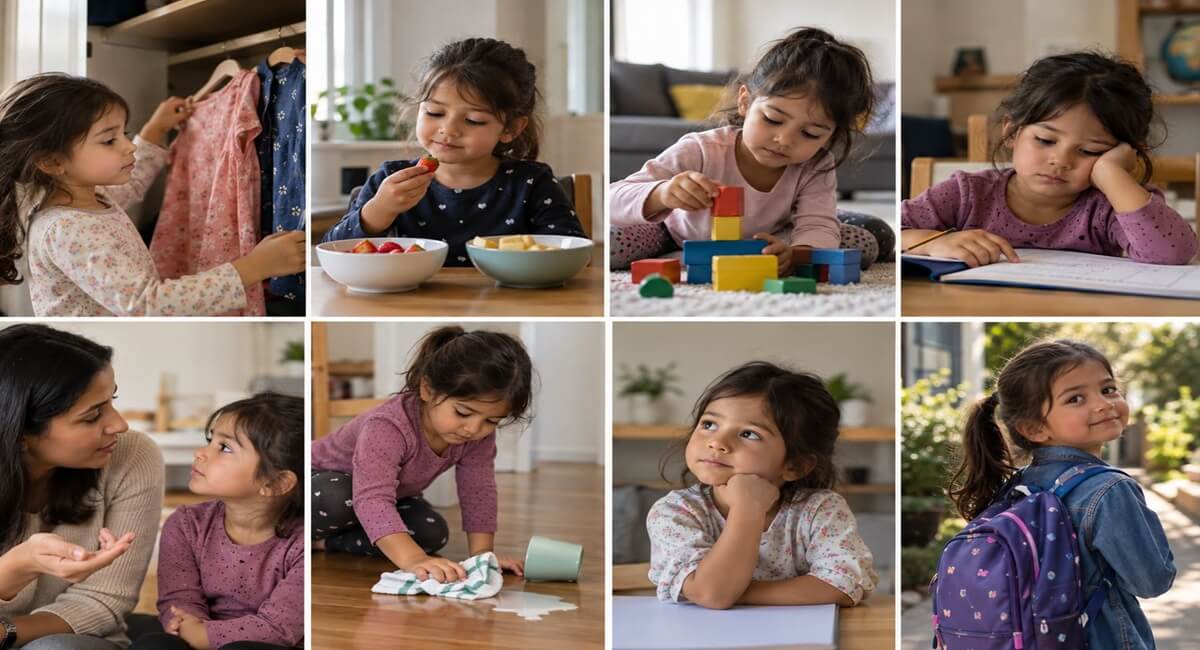
Children are not born knowing how to make good choices or take responsibility for their actions. These are skills that develop gradually through everyday experiences, repeated practice, and guidance from the adults around them.
A child learns responsibility not because they are told to "be responsible" once, but because they get opportunities to make small decisions, experience the consequences, reflect on what happened, and try again. Over time, these repeated experiences help children develop the ability to pause, think, choose, and take ownership of their actions.
It Begins with Small Choices
The process starts with low-stakes choices. A toddler choosing between two shirts or two snacks may simply appear to be expressing a preference, but they are also learning the basic mechanics of decision-making.
They are learning that:
- There are different options.
- They can make a choice.
- Their choice leads to an outcome.
- They can make another choice the next time.
Because the stakes are small, children can experiment without significant consequences. They may choose one snack today and another tomorrow, or decide to wear one shirt and later discover that it was not suitable for the weather.
One choice does not teach a child everything about decision-making. It is the repetition of hundreds of small choices over time that gradually builds the habit of choosing deliberately rather than simply reacting.
Learning the Connection Between Choices and Consequences
Understanding that actions have consequences also takes time. Children usually do not make this connection the first time something happens.
For example, a child who chooses to play instead of completing their homework may initially experience the rushed evening that follows as simply an unpleasant situation. They may not immediately recognise that their earlier choice contributed to it.
When the same pattern happens repeatedly, and an adult helps the child identify the connection—"You chose to play first, so now we have less time for homework"—the child gradually begins to recognise cause and effect.
Eventually, the child may start thinking about the consequence before making the choice. That shift is an important part of developing responsibility.
This is also why natural consequences can be useful learning experiences when they are appropriate and consistent. Children benefit from having an adult help them notice what happened and understand how their own actions contributed to the outcome.
Give Children Choices They Can Manage
Adults play an important role in helping children develop decision-making skills. One effective approach is to offer bounded choices rather than either giving complete freedom or making every decision for the child.
Instead of saying, "Do whatever you want," an adult might ask:
"Would you like to clean up before dinner or after dinner?"
The child still has a genuine choice, but the options are limited enough to be manageable.
Another useful approach is to ask questions that encourage children to think through their decisions.
Before an action, an adult might ask:
"What do you think will happen if you do that?"
Afterwards, they might ask:
"What could you do differently next time?"
These questions allow children to work through cause and effect themselves rather than simply receiving an explanation from an adult. With repetition, the questions that were initially asked by a parent or teacher can gradually become questions the child asks themselves.
That internal shift is an important step towards independent judgement.
Let Mistakes Become Opportunities to Repair
Mistakes are another important part of learning responsibility. However, children need opportunities to repair their mistakes rather than simply being punished for them or having an adult immediately fix everything.
If a child spills something, handing them a cloth and showing them how to clean it up gives them a simple, practical way to respond to what happened.
If a child hurts someone's feelings, an adult can guide them in understanding what happened and deciding what they can say or do to make things right.
These experiences give children a concrete understanding of what responsibility looks like.
A child who is never allowed to repair a mistake because an adult always steps in does not get the opportunity to practise responsibility. Similarly, punishment on its own does not necessarily teach a child how to respond differently next time.
Repair turns responsibility into something a child can do, not simply something they are told to feel.
From External Guidance to Independent Thinking
Over time, these small experiences begin to connect.
A child chooses something, experiences the result, reflects on what happened, makes a mistake, repairs it, and tries again. Gradually, this repeated process becomes an internal pattern:
Stop → Think → Choose → Act → Reflect
At first, an adult may need to guide the child through every step. Later, the child may only need a reminder. Eventually, they may begin to do the thinking independently.
For example, instead of waiting for an adult to ask, "What do you think will happen?", the child begins to consider the possible outcome before acting. Instead of being told to fix a mistake, they begin looking for a way to repair it themselves.
This is how external guidance gradually becomes independent judgement.
Helping Children Grow into Responsible Decision-Makers
Responsibility does not develop through one conversation, one rule, or one lesson. It grows through ordinary moments repeated over time.
A choice between two snacks, deciding when to finish homework, cleaning up a spill, thinking about what might happen next, or figuring out how to make an apology may seem like a small event on its own. Together, these experiences give children repeated opportunities to practise decision-making and responsibility.
The goal is not to prevent children from making mistakes or to make every decision for them. It is to give them enough age-appropriate opportunities to choose, experience, reflect, and repair.
With time and consistent guidance, children begin to understand that their actions have consequences, their mistakes can be repaired, and their choices are something they can think through for themselves. That gradual shift is that right in preschool, like GD Goenka La Petite can help them develop greater independence and confidence in making decisions.
Ms. Prachi
(Mother of Shritik from Nursery Class)
GDGLP, Sector -132 Noida




 +91 93123-45678
 joinhands@gdgoenka.com