



BLOG

25th August 2025
Routines at Home— Now and in the Future
In the early years of a child’s life, consistency and predictability offer comfort. While the world around them is new, exciting, and sometimes overwhelming, a stable routine at home helps children feel safe and secure.
Children Thrive on Routine
Children may not have words for it, but their behaviour often shows us how much they rely on knowing what comes next. Routines create structure—and structure builds confidence.
Here’s how a consistent home routine supports your child’s development:
- Predictability builds security: Knowing what to expect each day (meal times, play time, bedtime) helps children feel grounded and less anxious.
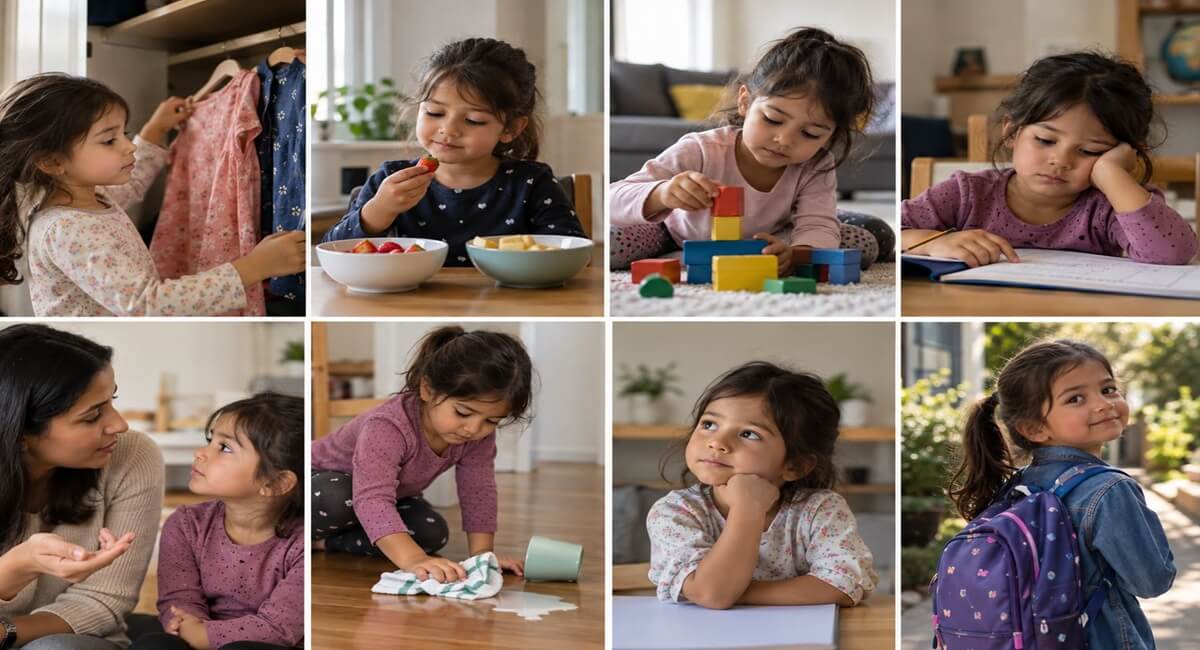
- It nurtures independence: When routines are consistent, children begin to take charge of their own actions. They know where their shoes go, when to brush their teeth, or how to pack their bags—because it's part of their rhythm.
- It improves cooperation: When routines are predictable, there are fewer power struggles. Transitions like bedtime or leaving the house become easier because the steps are familiar and expected.
- It supports better sleep, eating, and behaviour: Children’s bodies respond well to rhythm. A regular routine helps with everything from digestion to emotional regulation.
Routines Benefit Parents Too
A well-established routine doesn’t just help children—it creates calm for parents as well.
- Reduces daily decision fatigue: When your day has a flow, you don’t have to constantly negotiate or decide what’s next.
- Brings more peace and less chaos: Knowing what’s coming next helps reduce last-minute stress or confusion.
- Helps you plan your own day: When your child’s rhythm is predictable, you can carve out time for your own responsibilities and even some rest.
- Builds stronger relationships: Shared routines—like reading together before bed or preparing lunch as a team—create meaningful moments of connection.
Long-Term Benefits: Raising Capable, Confident Adults
A child who grows up with routine learns more than how to follow a schedule. Over time, they develop important life skills:
- Time management
- Self-discipline
- Organizational habits
- Responsibility
These foundational skills grow into adulthood. A teenager who knows how to manage their time often grew up in an environment where routines were modeled and respected. The goal isn’t rigidity, but rhythm—a flow to the day that leaves space for both structure and freedom.
Simple Tips for Creating a Home Routine
- Start small: Pick 2–3 parts of the day (e.g., mornings, meals, bedtime) and build consistency there first.
- Involve your child: Even young children can help set the table, pick out clothes, or tidy up toys. This gives them ownership.
- Be consistent, not perfect: Life happens. Routines are guides, not rules. If things go off track one day, simply return the next.
- Use visual cues: For toddlers, simple picture charts showing the steps of a routine can be very helpful.
At home, as in the Montessori classroom, children flourish when given structure that respects their need for independence. A thoughtful, predictable home routine sets the stage not only for smoother days today, but for a child who grows into a self-assured, balanced adult tomorrow.
Neeta Prasad
Deputy Director, Pre School Division
GD Goenka Group





 +91 93123-45678
 joinhands@gdgoenka.com