



BLOG

20 July 2026
The Importance of Sensory Development in Preschoolers
Introduction
Sensory development is essential during the preschool years, as children learn about the world through their senses: touch, sight, hearing, smell, and taste. It lays the foundation for cognitive, physical, social, and emotional growth. Activities such as water play, sand exploration, finger painting, nature walks, music, and hands-on experiences encourage children to explore, discover, and learn through play.
The Montessori Method and Sensory Exploration
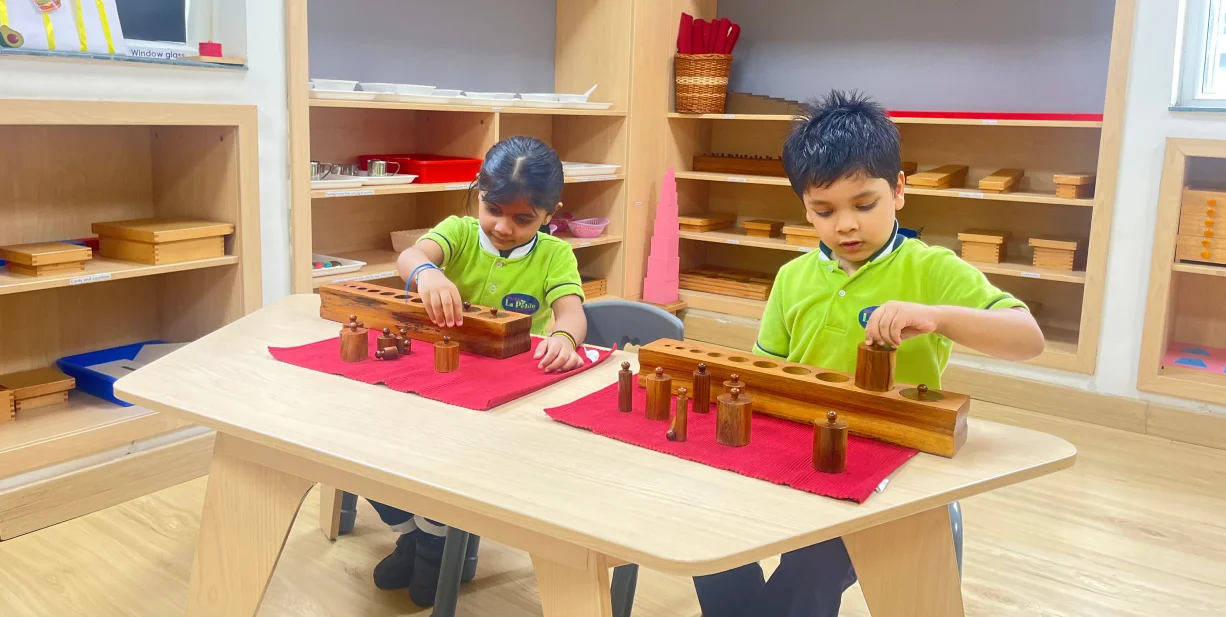
The Montessori Method recognizes that the early years are a child’s sensitive period for sensory exploration. During this stage, children naturally learn by using their senses to observe, compare, classify, and understand the world around them. Dr. Maria Montessori believed that “the hands are the instruments of the mind,” making hands-on sensory experiences an essential part of early childhood education.
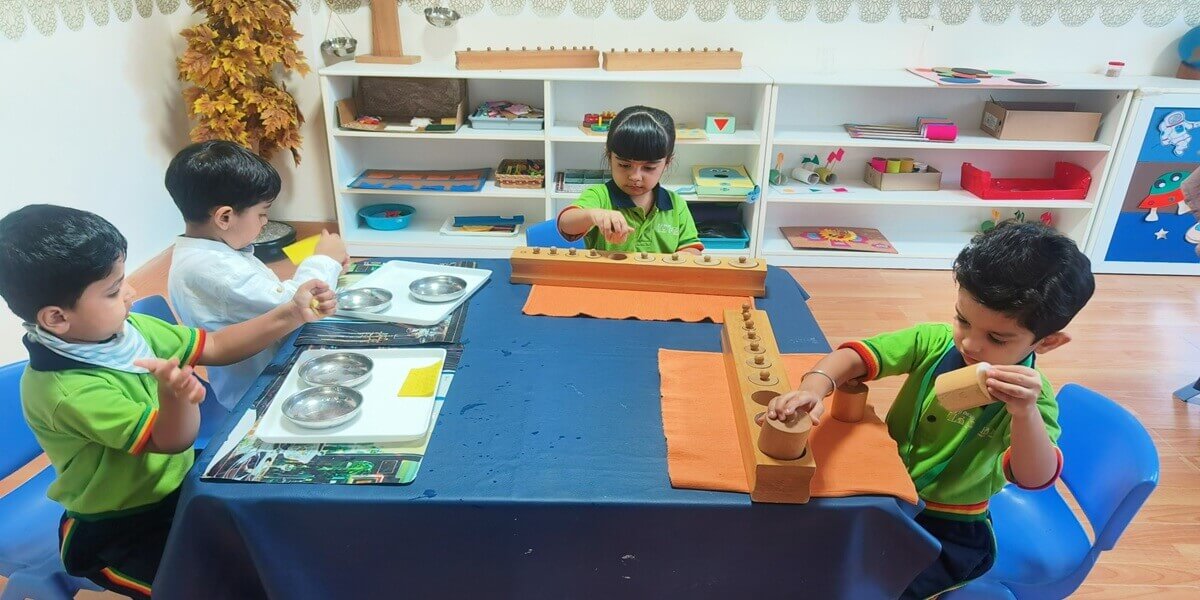
Montessori classrooms are thoughtfully prepared with scientifically designed sensorial materials that isolate one quality at a time, such as size, shape, colour, texture, sound, weight, temperature, and smell. Materials like the Pink Tower, Brown Stairs, Knobbed Cylinders, Colour Tablets, Sound Boxes, Fabric Box, etc., help children refine each of their senses through purposeful exploration. As children work with the materials, they also build the vocabulary needed to describe their experiences, supporting language development alongside cognitive growth.
Conclusion
Sensory experiences in Montessori education are not merely playful activities; they are purposeful lessons that prepare children for future learning in mathematics, language, science, and everyday life.
Every sensory experience is an opportunity for a child to grow, learn, and thrive.
Ms. Shikha Arora
Academic Head
Pitampura




 +91 93123-45678
 joinhands@gdgoenka.com