



BLOG

11th july 2025
The Montessori Teacher: The Silent Guide Behind Every Child’s Success
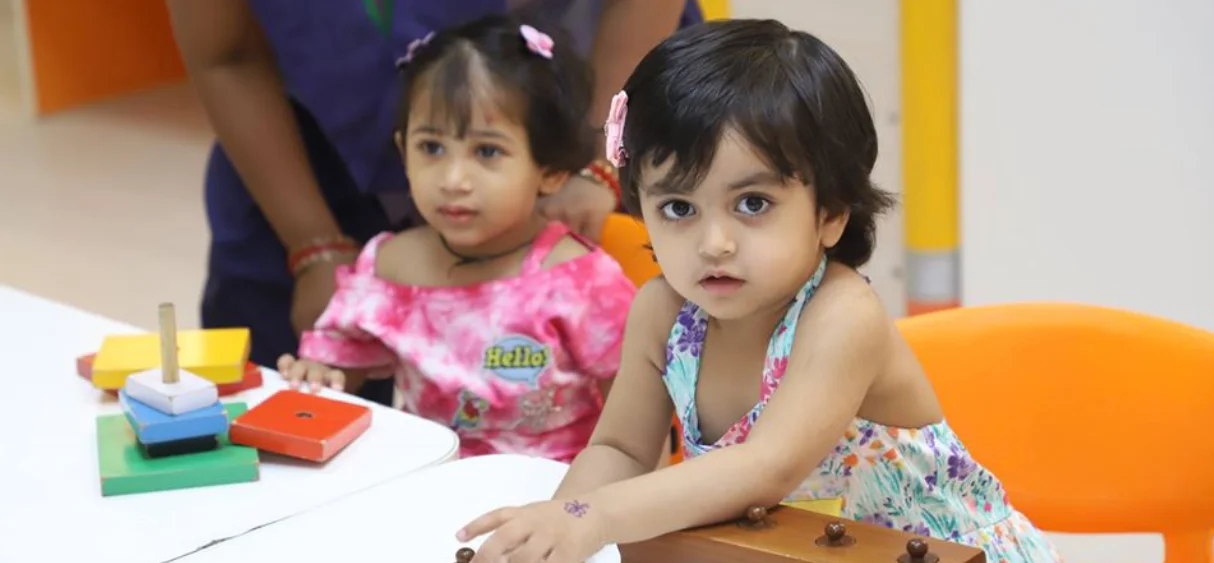
In a Montessori classroom, the environment is often described as calm, purposeful, and full of quiet energy. Children move independently, choose their activities, and engage in deep concentration—sometimes for surprising lengths of time. But behind this beautiful sense of order and focus lies the quiet but powerful presence of a trained Montessori teacher.
A Montessori educator is more of a guide than a director. But that does not make their role any less important. In fact, it’s quite the opposite.
The Montessori Teacher: More Than an Instructor
A trained Montessori teacher undergoes specialized training that includes child development, observation techniques, classroom management, and mastery of Montessori materials across subject areas. This extensive preparation equips them with a deep understanding of how children learn best—not just what they need to learn.
They know how to:
- Observe, not interrupt, so they can step in only when necessary.
- Introduce materials at the right moment, based on the child’s readiness.
- Guide rather than instruct, allowing children to discover through experience.
This careful orchestration supports each child’s natural curiosity and fosters independence, concentration, and a love for learning.
Maximizing the “Proactive Time” of the Day
Every classroom has moments when children are at their most alert, focused, and ready to engage—typically during the first work cycle in the morning. In Montessori, this is known as the "uninterrupted work period," a vital part of the day where deep learning and exploration happen.
Trained Montessori teachers use this proactive time with great intentionality:
- They prepare the environment beforehand, ensuring materials are complete, inviting, and developmentally appropriate.
- They observe children at work, noting their interests, challenges, and moments of readiness for new lessons.
- They offer lessons to individuals or small groups, carefully matching each child’s developmental stage and curiosity.
- They protect the work cycle, minimizing interruptions so that children can enter states of deep focus—what Maria Montessori called “normalization.”
This doesn’t happen by accident. It’s a result of thoughtful planning, deep knowledge of child development, and a commitment to respecting each child’s rhythm of learning.
As a Result? A Classroom That Runs on Purpose, Not Control
When a Montessori teacher uses the proactive hours wisely, the classroom becomes a true “prepared environment.” It may look peaceful on the surface, but it’s brimming with meaningful activity. Children are not simply busy—they’re engaged. They’re not just following instructions—they’re making choices. And all of this happens under the quiet guidance of a teacher who knows when to step in, when to step back, and how to gently lead each child toward their next step of development.
In a world that often focuses on measurable outcomes and structured instruction, the Montessori approach reminds us that education is most powerful when it aligns with how children naturally grow and learn. A trained Montessori teacher brings immense value—not through control, but through expertise, observation, and trust in the child’s potential.
It is this unseen yet intentional role that makes the Montessori classroom so unique, and the early hours of the day so impactful.
Meenakshi Khetrapal
Sr. Executive Director, Pre School Division
GD Goenka Group






 +91 93123-45678
 joinhands@gdgoenka.com