



BLOG

How Montessori Materials Move Children from Hands-On Experience to Conceptual Understanding
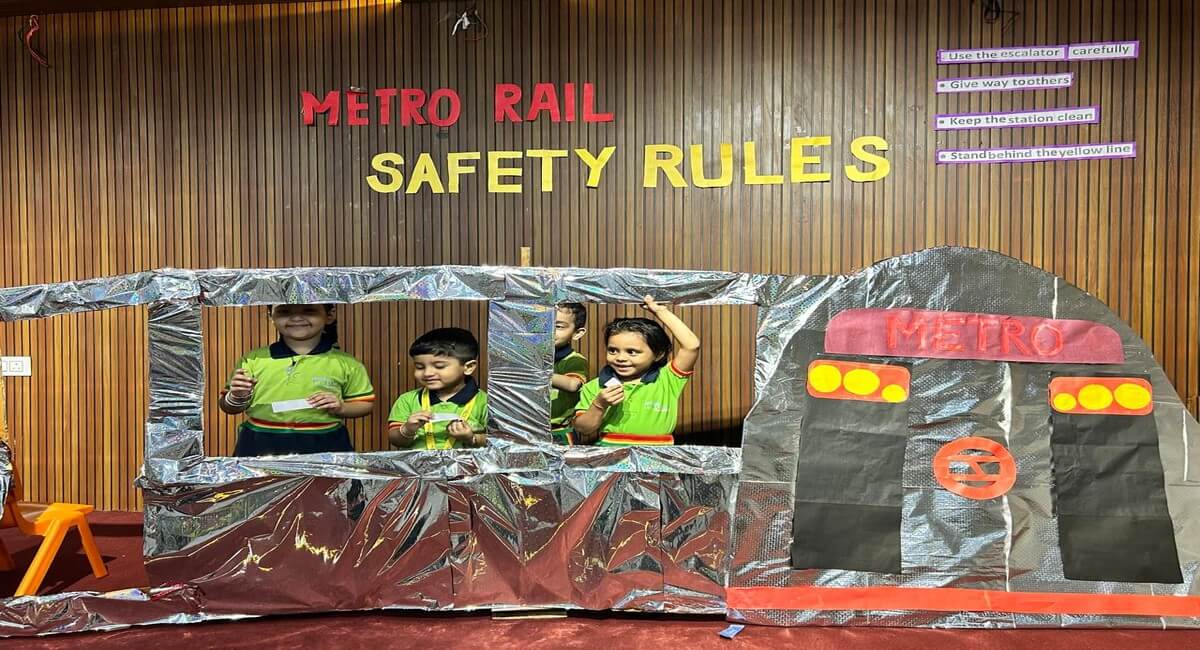
Young children understand the world by touching, observing, moving, and experimenting with things around them. A concept becomes easier to grasp when they can see it, handle it, and experience it rather than simply hear an explanation. This is one of the key principles behind Montessori education, where learning begins with concrete experiences and gradually develops into abstract understanding.
Montessori materials play an important role in this process. Designed to engage children's senses and encourage independent exploration, these materials help introduce concepts through meaningful activities. Whether a child is arranging blocks, sorting beads, or pouring water, each experience offers an opportunity to develop new skills and understand how things work.
Understanding the Role of Montessori Materials in Early Learning
Montessori materials are thoughtfully designed learning resources that allow children to explore concepts through direct experience. Instead of relying entirely on verbal instructions, children interact with objects, observe outcomes, and gradually understand the ideas behind each activity.
For example, when children work with shape puzzles, they begin recognising different forms and understanding how individual pieces fit together. Similarly, sorting objects by colour, size or shape introduces early mathematical thinking and classification. These activities encourage children to observe details, recognise patterns and make connections independently.
The objective is not simply to complete an activity but to understand the concept through the process. Repeating an activity also gives children opportunities to improve their approach, recognise mistakes and develop confidence in their abilities.
From Sensory Exploration to Conceptual Understanding
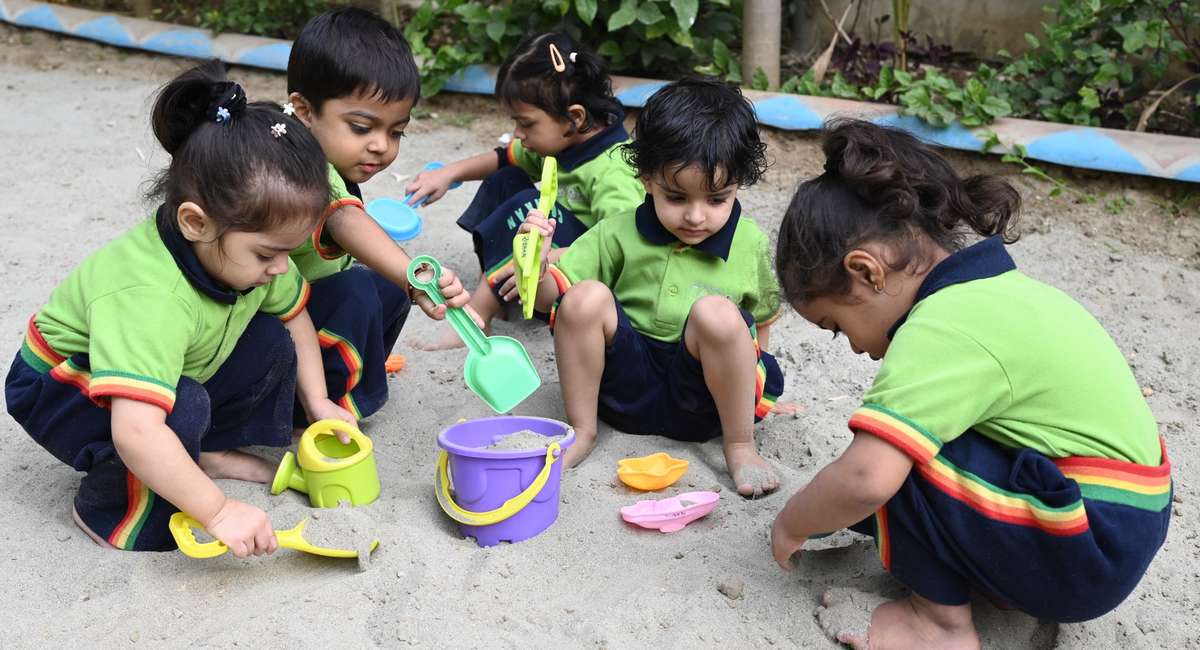
Young children learn significantly through their senses. Montessori education uses sensory experiences to help them distinguish between different textures, shapes, sizes, weights, and sounds. Activities involving sand, water, beads, and other materials allow children to explore concepts that might otherwise seem difficult to understand.
Consider how simple activities introduce important concepts:
- Water pouring: Transferring water between containers introduces volume, quantity and early measurement.
- Sand exploration: Playing with wet and dry sand helps children observe differences in texture, weight and shape.
- Sorting beads: Grouping beads by colour, size or pattern develops classification and early mathematical thinking.
- Shape activities: Matching and arranging shapes helps children recognise forms and understand spatial relationships.
Through these experiences, children are not simply being told how something works. They can observe the results of their actions, compare differences, and discover relationships between objects. Gradually, these sensory experiences become the foundation for understanding more complex ideas.
How Montessori Materials Support Overall Development
Beyond introducing academic concepts, Montessori materials support several areas of early childhood development. Each activity provides opportunities for children to strengthen their abilities through repetition, observation, and independent practice.
Some important developmental skills nurtured through these activities include:
- Fine motor skills: Threading beads, arranging small objects, and handling learning materials strengthen finger and hand movements.
- Hand-eye coordination: Placing shapes, stacking blocks, and transferring objects help children coordinate what they see with their movements.
- Concentration: Completing activities encourages children to remain attentive and focused.
- Problem-solving: Working with puzzles and construction materials allows children to explore different solutions.
- Independence: Repeating activities and correcting their own mistakes builds confidence in their abilities.
These experiences contribute to children's overall development and prepare them to engage with more complex learning experiences as they grow.
Moving from Concrete Learning to Abstract Thinking
One of the most important aspects of Montessori education is the gradual transition from concrete experiences to abstract understanding.
At an early age, children find it easier to understand an idea when they can physically interact with it. Once they become familiar with the concept, they can gradually understand and apply it without needing the physical material.
Consider how this happens when children begin learning mathematics. A child may initially use beads or counting objects to understand quantities. By physically handling these objects, they begin recognising that each item represents a number. They then connect these quantities with number symbols and gradually understand mathematical relationships such as addition and subtraction.
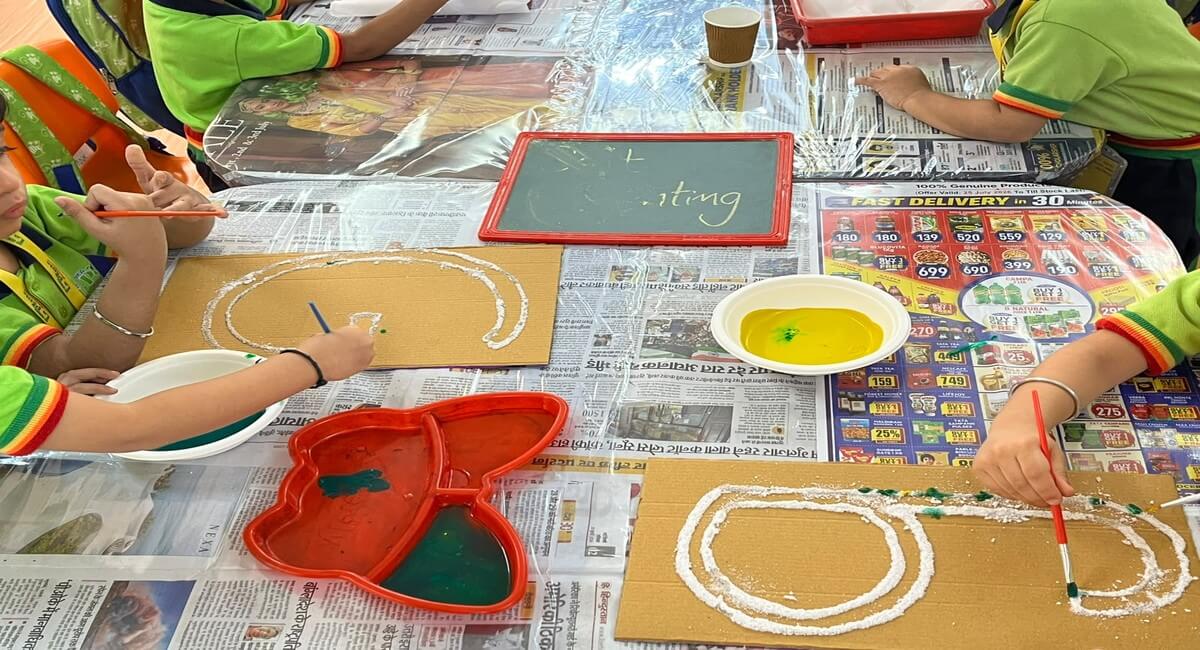
The same principle applies to language development. Children may begin by tracing letters with their fingers, recognising their shapes and associating them with sounds. With practice, they gradually become familiar with letter recognition, writing, and early reading.
This progression allows children to build understanding through experience rather than relying only on memorisation.
How GD Goenka La Petite Encourages Learning Through Montessori Materials
At GD Goenka La Petite, early childhood learning focuses on providing children with meaningful opportunities to explore, participate, and understand concepts through experience. Montessori materials and hands-on activities can make this process more engaging by connecting everyday exploration with early learning.
Through guided activities and opportunities for independent exploration, children can develop important foundations for learning:
- Learning through exploration: Interacting with materials that introduce shapes, colours, numbers and patterns.
- Sensory development: Exploring different textures, forms and materials through sensory activities.
- Independent learning: Repeating activities, experimenting with different approaches and learning at their own pace.
- Early mathematical understanding: Using tangible materials to recognise quantities, sequences and relationships.
- Overall development: Strengthening concentration, coordination, creativity and problem-solving through purposeful activities.
The educator's role is equally important in this process. By observing children's interests, introducing suitable materials and offering guidance when needed, teachers create opportunities for children to discover concepts independently while receiving the support they need.
At GD Goenka La Petite, the emphasis is on making learning an active and engaging process in which children are encouraged to ask questions, explore possibilities, and gradually develop an understanding of the world around them.
Building the Foundation for Meaningful Learning
Montessori materials show how simple, hands-on experiences can deepen understanding of complex ideas. When children are encouraged to touch, observe, experiment, and discover, they begin to develop connections that make learning more meaningful.
The journey from handling a counting bead to understanding a mathematical concept may seem small, but it represents an important step in early development. By encouraging curiosity, independence, and experiential learning, GD Goenka La Petite aims to help children build strong foundations for confident exploration and lifelong learning.
Ms Gunjandeep Kaur Chadha
- Pre-primary teacher
- GD Goenka La Petite
- Malibu Towne, Gurugram




 +91 93123-45678
 joinhands@gdgoenka.com