


BLOG

Nature Play for Preschoolers: Why Mud, Sand, Water and Leaves Are Better Learning Tools than They Look
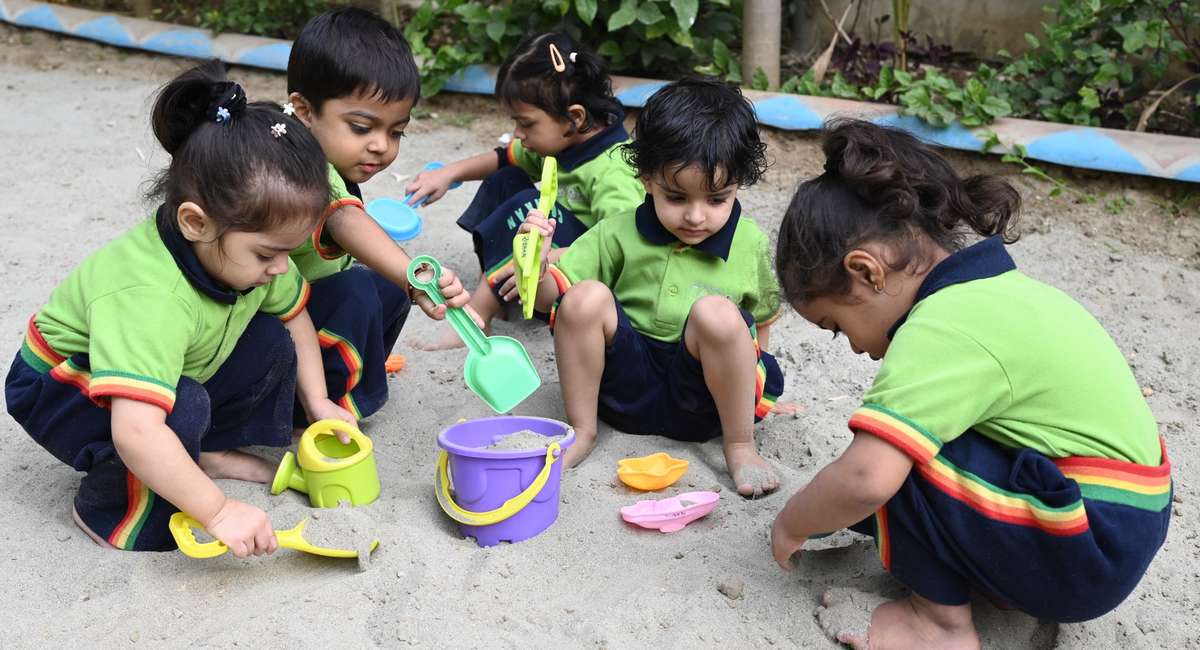
A child scooping sand, watching water flow, or collecting fallen leaves may appear to be engaged in simple play. Yet, these everyday experiences often involve observation, experimentation, decision-making, and discovery. As children interact with the natural world, they begin to understand textures, patterns, quantities, and cause-and-effect relationships without needing formal instruction.
Nature play for preschoolers creates spontaneous, enjoyable learning opportunities. It lets children follow their curiosity, explore at their own pace, and make sense of the world through firsthand experiences. During the early years, when learning is closely connected to sensory experiences, such simple interactions can play an important role in a child's development.
Why Nature Play Matters in Early Childhood
Children learn by engaging with the world around them. Natural materials offer open-ended experiences where there is no single way to play or one correct outcome. A handful of sand can become a construction project, water can lead to endless experiments, and leaves can spark questions about colour, shape and size.
Unlike activities with fixed instructions, nature play encourages children to make their own choices. They observe, try something, notice what changes, and attempt it again. This process nurtures curiosity, independent thinking and a willingness to explore new ideas, laying the foundation for meaningful learning.
How Natural Materials Support Early Learning
Mud, sand, water and leaves may be simple materials, but each offers a different way for children to explore and develop essential skills.
1. Mud: Encouraging Sensory Exploration and Creativity
Mixing soil with water introduces children to changing textures, consistency, and the effects of combining materials. As they mould, shape and create, they engage their senses, express their imagination and begin to understand cause and effect through experimentation.
2. Sand: Building Early Mathematical Understanding
Filling containers, comparing quantities and creating different shapes with sand introduce early mathematical concepts. Children begin to recognise differences in size, volume, weight and shape through practical experiences, making abstract ideas easier to understand later.
3. Water: Developing Observation and Reasoning
Pouring water, watching it move, or exploring which objects float and sink encourages children to question and predict. These simple experiences introduce early scientific thinking as they observe outcomes and begin to connect actions with results.
4. Leaves: Discovering Patterns and Classification
Collecting and comparing leaves helps children recognise differences in colour, shape, size and texture. Grouping leaves by shared characteristics develops observation, classification and descriptive language while encouraging a closer appreciation of the natural environment.
Developmental Benefits of Outdoor Nature Play
Nature play extends beyond sensory exploration. It supports multiple areas of development through experiences that children naturally enjoy.
- Cognitive development: Observing, comparing, predicting and solving simple problems strengthens early reasoning.
- Physical development: Digging, pouring, carrying and walking across varied surfaces improve coordination, balance and motor skills.
- Language development: Describing textures, colours, discoveries and experiences expands vocabulary and communication.
- Social-emotional development: Playing alongside others encourages sharing, patience, cooperation and confidence.
- Creative development: Using natural materials in imaginative ways gives children the freedom to express ideas and create without fixed outcomes.
These skills develop gradually through repeated experiences, with opportunities for children to explore, practise and learn at their own pace.
The Role of Teachers in Meaningful Nature Play
The value of nature play lies not only in the materials children use but also in how their exploration is supported. Teachers create opportunities for discovery by observing children's interests, allowing them time to experiment and introducing thoughtful questions that extend their learning.
Instead of demonstrating every step or directing children towards a specific outcome, educators can encourage them to notice, think, and explore further. Questions such as “What do you notice?” or “What might happen if you try this?” invite children to express their observations and develop their own understanding.
A balance of freedom, guidance, and age-appropriate supervision helps make outdoor experiences both enriching and safe.
Choosing a Preschool That Encourages Experiential Learning
When choosing a preschool, parents often look at the curriculum, classrooms, learning resources, and daily routine. It is equally important to understand how children learn through experiences beyond structured activities.
Ask how children are encouraged to explore independently, how teachers respond to their curiosity, whether hands-on learning is part of the daily routine, and how outdoor experiences are incorporated into the curriculum. The learning environment should offer opportunities for guided instruction as well as exploration, helping children develop confidence, independence, and a natural interest in learning.
GD Goenka La Petite: Learning Through Exploration and Discovery
At GD Goenka La Petite, early learning is rooted in Montessori principles that encourage independence, curiosity, and hands-on exploration. A thoughtfully prepared learning environment, sensorial materials, and guided experiences allow children to engage actively with concepts rather than rely solely on instruction.
The curriculum nurtures essential skills through experiential learning, including:
- Sensorial learning: Exploring textures, shapes, sounds, colours and other sensory experiences.
- Practical life skills: Developing independence, concentration, coordination and responsibility through purposeful activities.
- Individualised learning: Allowing children to engage with concepts at their own pace and build confidence in their abilities.
- Holistic development: Supporting cognitive, physical, social, emotional and language development as interconnected aspects of early learning.
With educators who guide rather than dictate, children are encouraged to make choices, explore their interests, and develop a sense of accomplishment through everyday learning experiences. This approach helps build a strong foundation for school readiness while nurturing a lasting interest in discovery.
Conclusion
Mud, sand, water, and fallen leaves may seem like ordinary parts of a child's surroundings, but they offer countless opportunities to observe, experiment, imagine and discover. Through these experiences, children begin developing the skills that support their understanding of the world and prepare them for more complex learning ahead.
At GD Goenka La Petite, curiosity is nurtured through a Montessori-based, child-centric approach that values exploration, independence and meaningful experiences. Because in the early years, some of the most valuable learning begins not with an answer, but with a child's desire to discover.





 +91 93123-45678
 joinhands@gdgoenka.com